This letter is as prescient today as it was in 2003. Edward O. Wilson (1929-2021) wore many hats in his long and productive life as a world leading thinker and scientist. Among those hats are ecologist, conservationist, systems thinker, social scientist, and humanist. In this letter, Wilson reaches out to another famous colleague, Henry David Thoreau who lived over 200 years ago, in a search for how humans will continue to live within nature. Our world has changed a lot in those 200 years, not the least of which is the growth in world population with its various impacts on our built-natural environment. From roughly 1 billion people in Thoreau’s time (U. S. Census Bureau, 2022) the population has grown to 8 billion today, with estimates of 10 billion around 2050 (World Economic Forum, 2019). This letter is in its entirety.
A Letter to Thoreau
Henry!
I am at the site of your cabin on the edge of Walden Pond. I came because of your stature in literature and the conservation movement. I came because of all your contemporaries, you are the one I most need to understand. As a biologist with a modern scientific library, I know more than Darwin knew. I can imagine the measured responses of that country gentleman to a voice a century and a half beyond his own. It is not a satisfying fantasy: the Victorians have for the most part settled into a comfortable corner of our remembrance. But I cannot imagine your responses, at least not all of them. You left too soon, and your restless spirit haunts us still.
I am here for a purpose: to become more Thoreauvian, and with that perspective better to explain to you, and in reality to others and not least to myself, what has happened to the world we both have loved. . .
The natural world in the year 2001 is everywhere disappearing before our eyes–cut to pieces, mowed down, plowed under, gobbled up, replaced by human artifacts.
No one in your time could imagine a disaster of this magnitude. Little more than a billion people were alive in the 1840s. They were overwhelmingly agricultural, and few families needed more than two or three acres to survive. The American frontier was still wide open. And far away on continents to the south, up great rivers, beyond unclimbed mountain ranges, stretched unspoiled equatorial forests brimming with the maximum diversity of life. These wildernesses seemed as unattainable and timeless as the planets and stars. That could not last, because the mood of Western civilization is Abrahamic. The explorers and colonists were guided by a biblical prayer: May we take possession of this land that God has provided and let it drip milk and honey into our mouths, forever.
Now, more than six billion people fill the world. The great majority are very poor; nearly one billion exist on the edge of starvation. All are struggling to raise the quality of their lives any way they can. That unfortunately includes the conversion of the surviving remnants of the natural environment. Half of the great tropical forests have been cleared. The last frontiers of the world are effectively gone. Species of plants and animals are disappearing a hundred or more times faster than before the coming of humanity, and as many as half may be gone by the end of this century. An Armageddon is approaching at the beginning of the third millennium. But it is not the cosmic war and fiery collapse of mankind foretold in sacred scripture. It is the wreckage of the planet by an exuberantly plentiful and ingenious humanity.
The situation is desperate–but there are encouraging signs that the race can be won. Population growth has slowed, and if the present trajectory holds, it is likely to peak between eight and ten billion people by century’s end. That many people, experts tell us, can be accommodated with a decent standard of living, but just barely: the amount of arable land and water available per person, globally, is already declining. In solving the problem, other experts tell us, it should also be possible to shelter most of the vulnerable plant and animal species.
In order to pass through the bottleneck, a global land ethic is urgently needed. Not just any global land ethic that might happen to enjoy agreeable sentiment, but one based on the best understanding of ourselves and the world around us that science and technology can provide. Surely the rest of life matters. Surely our stewardship is its only hope. We will be wise to listen carefully to the heart, then act with rational intention with all the tools we can gather and bring to bear.
Henry, my friend, thank you for putting the first element of that ethic in place. Now it is up to us to summon a more encompassing wisdom. The living world is dying; the natural economy is crumbling beneath our busy feet. We have been too self-absorbed to foresee the long-term consequences of our actions, and we will suffer a terrible loss unless we shake off our delusions and move quickly to a solution. Science and technology led us into this bottleneck. Now science and technology must help us find our way through and out.”
Excerpted from the prologue of The Future of Life by Edward O. Wilson, 2003, Vintage Press
Some words of wisdom:
We humans are smart enough to have created complex systems and amazing productivity; surely we are also smart enough to make sure that everyone shares our bounty, and surely we are smart enough to sustainably steward the natural world upon which we all depend.”
– Donella Meadows
The greatest threat to our planet is the belief that someone else will save it.”
– Robert Swan
We shall require a substantially new manner of thinking if mankind is to survive.”
The world is overwhelmingly short-term focused, and no one really knows what the future holds as the global built-natural environment evolves. It likely will be more or less recognizable compared to today. Many of us, but not all, have enjoyed living in a high-quality built environment/standard of living while our natural environment has degraded, largely unnoticed by many. Changes to our built-natural environment will likely not happen quickly but over decades, centuries, and millennia (if this isn’t considered quickly, which is a relative term). During this time, our built-natural environment is poised for significant change, some for the worse and hopefully some for the better (World Economic Forum, 2023). There is also the Doomsday Clock, originally established with the involvement of Albert Einstein to approximate humanity’s end from nuclear weapons. It has since been expanded to include other threats, and that clock keeps moving forward toward midnight (Weise, 2023a). There are also dire predictions from credible sources and acknowledgment that it is too late to fully prevent the resulting impacts (Jazeera, 2023, Ripple et al., 2023; Sumata, 2023). These predictions include ones from a Nobel Peace Prize-winning collection of scientists and perhaps the greatest group of scientists ever assembled—the International Governmental Panel on Climate Change or IPCC (2023). The press has highlighted this report (e.g., 9News, 2023; Borenstein and Jordans, 2023; Rice and Pulver, 2023). Others forecast variations on this future, but they are not substantially different (Barrage and Nordhaus, 2023; Watts, 2023; van der Wijst et al., 2023). These are in addition to the prescient 1972 Limits to Growth projections (Meadows et al., 1972), updates and various off-shoot initiatives (Bardi and Pereira, 2022; Herrington 2022), and myriad associated efforts (We Don’t Have Time, nd) that have precipitated this four-part series. There are also more optimistic outlooks based on currently available technologies (Weise, 2023b). Although somewhat dated, one study found that not one of 150 countries meets basic needs of its citizens at a globally sustainable level of resource use (O’Neill et al., 2018). An interesting link is also provided with this citation (O’Neill et al., 2018) that provides a comparison of various resource usage for these 150 countries. Ultimately, no one precisely knows what the future holds, although the facts and trend lines of the risks to our global society, economy, and built and natural environments appear indisputable. Thus, it may be best to view these various scenarios within a “cone of possibilities” while planning and preparing for the worst.
Some projections are that sea level will rise 12 inches by 2050 (National Oceanic and Atmospheric Administration, 2022a). That’s less than 27 years from now. Ten percent of the world’s population live in coastal areas less than 32 feet above sea level (Bressan, 2021), 267 million are less than six feet above sea level, 44 percent live within about 90 miles of the coast, and eight of the ten largest cities in the world are near a coast (National Oceanic and Atmospheric Administration, 2022b). This does not consider more intense storms (marine and terrestrial) from increased heat in the oceans and the atmosphere. Biodiversity extinction continues at alarming rates (70 percent of wildlife is already lost). That diversity is the basis of a healthy planetary ecosystem for all living things, including humans.
Biodiversity encompasses the living nature in all its variety. It provides many services, including climate regulation, pollination and soil formation, decomposing wastes, provision of raw materials, and contributions to our mental and physical well-being. There are three dimensions to biodiversity: ecosystems, species, and genetics. More than 90% of biodiversity loss is caused by five drivers: land degradation and habitat destruction, resource (over) exploitation, climate change, pollution, and invasive species.”
Avice-Hyet and Petit, 2023
It’s hard to estimate other high risks, including continuing wars such as in Ukraine. The coming decade will largely find whether we will succeed or fail in maintaining a quality, built-natural environment for all within a healthy global ecosystem.
Politics may seem real (and it has a definite impact on our lives, positive and negative), but it’s not reality even though it feels like it since we’ve all been raised within economic and societal systems. The natural environment is the base reality of a livable built-natural environment including the natural resources we need to have quality lives (clean air, clean water, clean food, etc.).
Ultimately, “Mother Nature” holds the “trump card,” while the built environment and the natural resources we need will pay the price financially, economically, quality of life, and extinction of species, potentially including ourselves. Even the rich are subject to Mother Nature’s laws and behaviors. While they may be able to protect themselves from her ravages for a while, eventually, she will impact them as she has the most vulnerable. (Jazeera, 2022).
Our world is approaching a mass extinction of nature, similar to those caused by the asteroid that slammed into the Gulf of Mexico 66 million years ago, ending the Cretaceous period and the age of dinosaurs. The asteroid wiped out 75% of all life on Earth. The difference this time is that slow-motion destruction is still progressing right before our human eyes (Ramanujan, 2021). The net consequences for nature, including humans, could be catastrophic given time and events unless we take them seriously. (Cowie et al., 2022; Dryden and Duncan, 2022; Greenfield, 2023; Greshko, 2021; McGuigan, 2022). Understanding both the physical and social tipping points is critical to mitigate and avoid the worst impacts (National Academies, 2023b). One intriguing book recently released explores the contribution of social sciences in conservation and conserving biodiversity (Miller et al, 2023). A better understanding is essential considering the central role humans are playing in the Anthropocene Epoch and degradation of our global ecosystem (McCoy, 2023). Moreover, nature will help us save the planet if we let it (Carew, 2023).
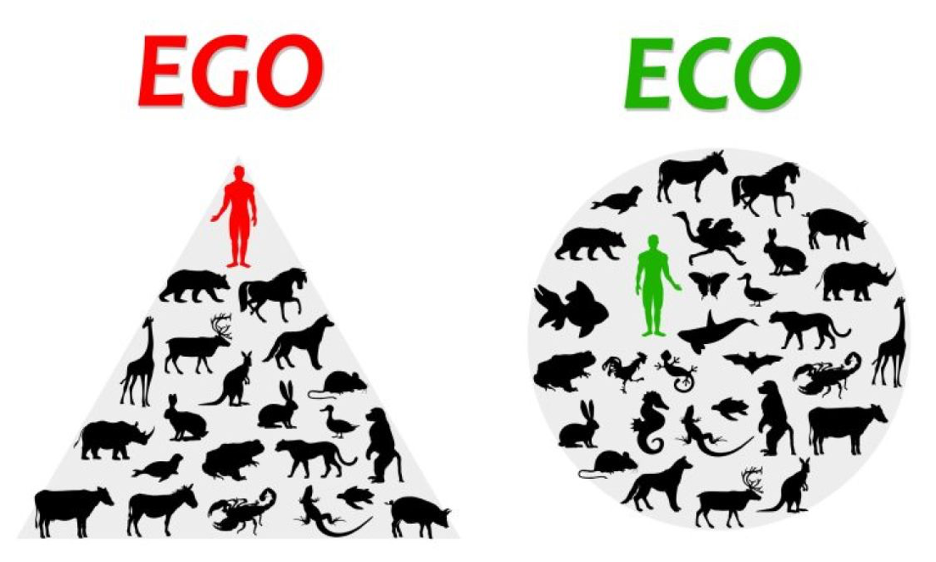
The central challenge is for us as humans is to see ourselves as part of the natural world, not separate or superior to it (Figure 4). There is hope and movement in a recent initiative called the Well Being Economy Governments Partnership (Meredith, 2023). This effort seems to be growing and is one to watch. It was stunning that the President of Ireland, Michael D. Higgins, recently condemned the obsession with economic growth and urged the country to rebalance the economy, ecology, and ethics (Leahy, 2023). Valuing various aspects of nature, such as infrastructure, continues (The Editors, 2023). There are also many other ideas and efforts underway. Some of which are Reuters (2023), Rotterdam School of Management (2020), Savini (2022), Stanway (2023), U.S. Army Corps of Engineers Program Engineering with Nature (U. S. Army Corps of Engineers, n.d.), National Academies (2022), and United Nations (2023b). This does not exclude the vast number of other efforts underway (e.g., Puko, 2023). The European Union has recently established sustainability rules that will require more rigorous reporting by companies around the world (Holger, 2023). Recently, the small Pacific Island country of Vanuatu is poised to gain UN approval to seek an unprecedented legal opinion from The Hague on what obligation countries have to combat climate change (Freedman, 2023). This is another aspect to watch for how it develops. With my background in transportation, it is appropriate to give a nod to the myriad efforts in that venue (Khatib, 2023). Technology advances are also in the mix (National Academies of Sciences, Engineering, and Medicine, 2023c). It is also encouraging to see other system integration efforts, in this case, the integration of ecosystem health and public health (National Academies of Sciences, Engineering, and Medicine, 2023a). After all, we are all dependent on a healthy ecosystem.
Figure 4. Humans superior to or separate from versus a part of the natural world. (Source: Hans Lak LinkedIn post 11-21-2022)
While the science behind how and how quickly our global ecosystem will change is not precise, the risks could not be higher in dismissing the timing or severity of these changes. While world-class scientists have overwhelming evidence of the impacts and how to mitigate them (United Nations Thailand, 2023, World Economic Forum, 2022, 2023), we cannot become seduced into ignoring or reducing the urgency of arguments on the precision (Bailey, 2023) of what can be done to mitigate the greatest impacts, or outright misinformation and denials (Banerjee et al., 2021). Others, including banks (Kusnetz, 2023), have not sufficiently moved toward a more sustainable built-natural environment. Inadequate action will only increase the risks. There are confounding features of our global environment, such as net growth of Antarctic Sea ice, that has yet to be explained and appears to be acting differently than the Arctic relative to global warming (Blanchard-Wrigglesworth et al., 2022; Antarctica Journal, 2023; NASA Earth Observatory n.d.; Parkinson, 2019). This does not mean that global warming is not real, but it does point out we have a lot to understand.
Planet Earth has one global ecosystem that contains a subordinate human global society and economy. In protecting our planet Earth, re-ordering our human systems to be compatible with nature, and changing hearts and minds, we will succeed or fail—together. (Gergis, 2022; Watts, 2022).
In one final thought, I have recently realized that there is an inextricable link between the existential threats of balancing truly sustainable built-natural environments and of castes in the United States and around the world (Bakewell-Stone, 2021; Wilkerson, 2020)—a planetary crisis. Over the next 20 years, we are going to encounter a “karmic moment of truth” as to how we collectively determine the quality and direction of our world society, built, and natural environments (Isabel Wilkerson interview of 2-13-2023 on The Last Word news broadcast with Lawrence O’Donnell; World Economic Forum, 2023; Vespa, 2020). We must become a real pluralistic society in the United States and globally. Diversity in nature and humanity is the default, not a monoculture. Diversity provides deeper, more flexible, more resilient, and ultimately stronger systems.
In a world without caste, being male or female, light or dark, immigrant or native-born, would have no bearing on what anyone was perceived as being capable of. In a world without caste, we would all be invested in the well-being of others in our species if only for our own survival, and recognize that we are in need of one another more than we have been led to believe. We would join forces with indigenous people around the world raising the alarm as fires rage and glaciers melt. We would see that, when others suffer, the collective human body is set back from the progression of our species. A world without caste would set everyone free.”
Wilkerson, 2020
It is the human species that has fashioned the world in which we live, and the trends we have created. Likewise, our responsibility is to solve our built-natural environment challenges while resolving our caste issues. The United Nations (2023a, 2023b, 2023c), and many others have stoked, advocated, and advanced needed change. Still, “The 2020s will be remembered as the decade that determined the fate of humanity. We can each choose to be part of the critical mass that will change the world. And when we do, it will bring profound meaning and purpose to our lives.” (Lohan, 2023; Gergis, 2023).
Wisdom is knowing that you know nothing.”
—Socrates 399 B.C., from ‘Plato’s Apology’ (my simple interpretation: to have the humility for continuous learning and changing your thinking)
Let’s face it, the universe is messy. It is nonlinear, turbulent, and chaotic. It is dynamic. It spends its time in transient behavior on its way to somewhere else, not in mathematically neat equilibria. It self-organizes and evolves. It creates diversity, not uniformity. That’s what makes the world interesting, that’s what makes it beautiful, and that’s what makes it work.”
—Donella Meadows
If all mankind were to disappear, the world would regenerate back to the rich state of equilibrium that existed ten thousand years ago. If insects were to vanish, the environment would collapse into chaos.”
Bardi, U., & Pereira, C. Á. (2022). Limits and beyond: 50 years on from the limits to growth, what did we learn and what’s next?: A report to the Club of Rome. Exapt Press.
Barrage, L. and W. D. Nordhaus. (2023, April). Policies, Projections, and the Social Cost of Carbon: Results from the DICE-2023 Model. National Bureau of Economic Research. Retrieved April 23, 2023, from https://www.nber.org/system/files/working_papers/w31112/w31112.pdf
Cowie, R. H., P. Bouchet, B. Fontaine (2022, January 10). The Sixth Mass Extinction: fact, fiction or speculation?[Video]. Biological Reviews; Wiley. Retrieved April 23, 2023, from https://doi.org/10.1111/brv.12816
Dryden, H., and D. Duncan. (2022, October 28). Climate Disruption Caused by a Decline in Marine Biodiversity and Pollution[Video]. International Journal of Environment and Climate Change; SCIENCEDOMAIN international. https://doi.org/10.9734/ijecc/2022/v12i111392
Herrington, G. (2022). Five Insights for Avoiding Global Collapse: What a 50-Year-Old Model of the World Taught Me About a Way Forward for Us Today. Mdpi AG.
International Planet Protection Convention. (n.d.). Synthesis Report of the IPCC Sixth Assessment Report (AR6). Summary for Policymakers. IPCC. Retrieved April 23, 2023, from https://report.ipcc.ch/ar6syr/pdf/IPCC_AR6_SYR_SPM.pdf
Lohan, T. (2023, March 20). ‘What Really Keeps Me Up at Night’: A Climate Scientist’s Call to Action. The Revelator. Retrieved April 23, 2023, from https://therevelator.org/gergis-climate-change/
Meadows, D. H., D. L. Meadows, J. Randers, W. W. Behrens III. (1972). The Limits to Growth: A Report for the Club of Rome’s Project on the Predicament of Mankind. New York: Universe Books.
National Academies of Sciences, Engineering, and Medicine. (2023b). Integrating Public and Ecosystem Health Systems to Foster Resilience: A Workshop to Identify Research to Bridge the Knowledge-to-Action Gap: Proceedings of a Workshop. The National Academies Press. Retrieved April 23, 2023, from https://doi.org/10.17226/26896
Parkinson, C. L. (2019). A 40-y record reveals gradual Antarctic sea ice increases followed by decreases at rates far exceeding the rates seen in the Arctic. Proceedings of the National Academy of Sciences of the United States of America, 116(29), 14414–14423. Retrieved May 13, 2023, from https://doi.org/10.1073/pnas.1906556116
Ripple, W. J., C. Wolf, T. M. Lenton, J. W. Gregg, S. M. Natali, P. B. Duffy, J. Rockström, H. J. Schellnhuber. (2023). Many risky feedback loops amplify the need for climate action. One Earth, 6(2), 86–91. Retrieved April 23, 2023, from https://doi.org/10.1016/j.oneear.2023.01.004
Sumata, H., L. D. De Steur, D. V. Divine, M. A. Granskog, and S. Gerland, S. (2023, March 15). Regime shift in Arctic Ocean sea ice thickness. Nature, 615(7952), 443–449. Retrieved April 30, 2023, from https://doi.org/10.1038/s41586-022-05686-x
United Nations. (2023). Global Sustainable Development Report (GSDR) 2023 | Department of Economic and Social Affairs. (n.d.). Retrieved April 30, 2023, from https://sdgs.un.org/gsdr/gsdr2023
van der Wijst, KI., F. Bosello, S. Dasgupta, et al. (2023). New damage curves and multimodel analysis suggest lower optimal temperature. Nat. Clim. Chang. Retrieved April 30, 2023, from https://doi.org/10.1038/s41558-023-01636-1
Vespa, J., L. Medina, and D. M. Armstrong. (2020). Demographic Turning Points for the United States: Population Projections for 2020 to 2060. Current Population Reports, P25-1144, U.S. Census Bureau, Washington, DC, 2020.
There are a lot of systems thinkers but two are among my favorites:
Edward O. Wilson, a world-renowned scientist of the natural environment (Wilson, 1998, 2012, 2014, 2016, and many others not reflected in this blog)
Robert Prieto, a world-renowned engineer of the built environment (Prieto, 2008, 2015, 2017, 2020, 2022a, 2022b, and many others not reflected in this blog)
Another favorite of mine is Donella Meadows’ Thinking in Systems (2008) a sustainability-focused book and one of the original 1972 The limits to Growth authors. Many others are actively addressing the fundamentals of improving our built-natural environment.
There are also other systems thinking efforts toward more holistic thinking underway. It is encouraging to see efforts on valuing nature, such as a recent agreement by the United States and Australia (Chung, 2022) and others (MacEacheran, 2022; Well Being Economy Alliance, n.d.). Two of the more significant efforts toward more holistic thinking include the National Academies (2022) report with recommendations on taking a systems approach toward a better understanding of the built-natural environment and Gaya Herrington’s (2022) book on five insights from a relook at the original Limits to Growth model which confirmed the original 1972 trend lines. I am especially struck by the latter’s objectivity and clarity. In sum, her five insights are:
We are connected, and acting like we are not has led us to the brink of collapse.
Growth is not a good goal. In fact, it is the cause of society’s problems.
We need to fundamentally change society’s priorities if we want to avoid significant declines in our current levels of well-being.
Time is of the essence to make this change.
The end of the growth pursuit does not mean the end of progress, quite the opposite.
Tenants of a path forward:
I have tried to establish this list of tenants which will be needed to engage the challenges of global growth in a meaningful and productive way.
A good faith effort must be made by all, or at least a majority, to avoid the tipping points, which could last centuries if not millennia (Dixon-Declève et al., 2022).
A clear and straightforward focus must be developed to bring these challenges to the attention of the public. The lack of a clear focus, in fact, may be part of the problem in engaging our global society in an acutely focused direction forward rather than for narrow scientific, engineering, or other interests. This is a very difficult task. The world is now replete with conferences, meetings, books, publications, and other venues on a path forward before it is too late. This collection of venues is so vast it is virtually impossible to stay up with, much less digest.
A clear strategy and planning are needed to substantially manage positive and negative risks. Some are asserted by Dixon-Declève et al. (2022) as follows:
A program management approach is needed. A program involves interrelated projects combined with a systems approach. The extra investment required to build a more resilient civilization is estimated at two to four percent of global income per year for sustainable energy and food security alone. These “turnarounds” will surely be disruptive, and the likelihood of occurring is not high (Dixon-Declève, et al., 2022).
Priorities must be made. This will be neither clear nor simple, but I would suggest a good starting point is Herrington’s Figure 32 titled “Finance system within ecosystem, stable versus fragile” (Herrington, 2022). I might suggest calling this figure “Herrington’s Hierarchy of our Planet.” This is no great surprise since we all live within our planet’s natural ecosystem.
Meaningful metrics must be developed. I say meaningful because everything that can be measured is not important, and everything important cannot be easily measured. Recently, NASA space satellites are tracking 50 super emitters around the world (Greicius, 2023; Hartono, 2022). Some metrics being used are not accurate and therefore misleading and not very meaningful to developing a sustainable built-natural environment (Elgin and Rangarajan, 2022; Boudreau, 2022). This is highly problematic. Still, accurate and meaningful metrics on the health of our natural environment must be weighted equally, or higher, to the built environment on which it depends. They must reflect reality, not wrong, misleading, or inaccurate metrics that only make the task more difficult, if not impossible. This also includes a standard definition and understanding of terms (Jones, 2022; Savini, 2022).
Above all, action must be taken in conjunction with feedback loops to measure progress and enable adjustments to align the way. Without action, it is just a lot of talk. Dixon-Declève et al (2022) provide a pretty common sense list of actions for our future which I have adapted.
Reduce polarization.
Share wealth more fairly.
Act in the interests of future generations.
Change how you measure progress, value well-being and nature over financial growth.
Engage citizens about what really matters in society…most don’t read papers and books on our planet’s dilemmas.
Send unequivocal signals to markets on long-term commitment and investment transformation.
Join the movements and do what you can in your own life.
Vote for politicians who value the future.
Start conversations and efforts in how our global society and planet can be improved.
The need for meaningful feedback loops has already been mentioned but bears repeating. These are needed to measure progress and adjust as needed to achieve priorities and goals.
Finally, as feedback is received, adjust actions as needed to achieve the stated priorities and goals.
One of the most salient, simple, and summarized rules for a healthy built-natural environment is from Donella Meadows, et al. (1972), and this still speaks true today.
Renewable resources should be used no faster than they can regenerate.
Pollution and wastes shall not be put into the environment faster than the environment can recycle them or render them harmless.
Non-renewable resources shall not be used at all, and renewable substitutes should be developed.
The human population and the physical capital plant must be kept at levels low enough to meet the first three conditions.
The previous four conditions must be met through processes that are democratic and equitable enough that people will stand for them.
In theory, the United Nations seems the right governance body to lead this work. The UN’s work is meaningful to our global society and planetary ecosystem, including 17 ambitious sustainability goals developed in 2015. These goals were targeted to be accomplished by 2030 and some progress has been made (United Nations, 2022, 2023). These goals are:
No poverty
Zero hunger
Good health and well-being
Quality education
Gender equality
Clean water and sanitation
Affordable and clean energy
Decent work and economic growth
Industry innovation and infrastructure
Reduced inequalities
Sustainable cities and communities
Responsible consumption and production
Climate action
Life below water
Life on land
Peace, justice, and strong institutions
Partnerships for the goals
However, the UN (by design) lacks the authority to bring all nations in line with what is needed, and it is a fantasy to believe otherwise (e.g., United Nations, 2022). Thus, it is an open question whether the myriad efforts currently underway will succeed in mitigating the growing impacts on our global society and ecosystem or whether a new form of governance should be developed. Will each country rise to the occasion (Searcey, 2022; Office of Science and Technology Policy, 2022; Greenfield, 2022; Frazen, 2022; Meyer 2022)? Will companies force the needed change (Weston, 2022; Schneider Electric, 2022; World Economic Forum, 2022)? Will we find common ground and work together to resolve our collective issues (Sarkar, 2019)? Will people around the world force and guide us, from the ground up, to a more sustainable built-natural environment (Meadows, 1994; Wahl, 2020)? What is fair and equitable responsibility (for example, Ghosh et al., 2022)? How will the public and private sectors work together in resolving this existential crisis? These are all critical but unanswered questions. As it is, efforts are largely fragmented while many are doing the best they can.
There is a lot of work to be done, individually, societally, and globally. The simple and unavoidable truth is that whatever the future holds, we will succeed or fail together.
There are no separate systems. The world is a continuum. Where to draw a boundary around a system depends on the purpose of the discussion.
Dixon-Declève, S., W. Gaffney, J. Ghosh, J. Randers, J. Rockström, P. Espen Stoknes. (2022). Earth for All: a survival guide for humanity, New Society Publishers, Canada.
Herrington, G. (2022). Five Insights for Avoiding Global Collapse: What a 50-Year-Old Model of the World Taught Me About a Way Forward for Us Today. Mdpi AG.
Meadows, D. H., D. L. Meadows, J. Randers, and W. W. Behrens III. (1972). The Limits to Growth: A Report for the Club of Rome’s Project on the Predicament of Mankind. New York: Universe Books.
United Nations. (2023). Global Sustainable Development Report. United Nations Department of Economic and Social Affairs Sustainable Development. Retrieved April 1, 2023, from https://sdgs.un.org/gsdr/gsdr2023
I am in my eighth decade of existence and believe, rightly or wrongly, that I have gained some perspective on the arc of life on Planet Earth. I have been a part of our global society, and its development, through my years of local, state, national, and international experience in academia, engineering, construction, transportation, natural sciences, management, and leadership. I also enjoy building things of value, physically and metaphorically, in concert with the social, human-built, and natural environments. At my base, I consider myself a scientist, nature, and evidence-based from an early age, valuing the scientific method and, as more evidence comes forth, that conclusions may change. That is in stark contrast to the misinformation in our society today. I have lived a good life, enjoyed the natural world, and benefited from myriad developments. I am proud to have brought some built-natural environment perspective to mitigate, if not improve, our natural environment. These include recycling, asset management, environmental management, infrastructure development to reduce costs and environmental impacts, improvement of habitats and associated species outcomes, and the quality of people’s lives. Unfortunately, they don’t count for much in the greater scheme of life.
As our planet approaches a population of eight billion people (Davies, 2022) (there were about 2.5 billion in 1950 when I was born), I am reminded of the “carrying capacity” (Odom, 1971) which is familiar to ecologists, farmers, ranchers, and conservationists. That is, there is a limit to the number of individuals a habitat, including our global habitat, can sustain. Moreover, risks are growing (World Economic Forum, 2022; Wallace-Wells, 2017; Pulver and Rice, 2022). It is virtually impossible to deny the influence human beings have had on the world, even to the point of creating a new geologic epoch, the Anthropocene (Brondizio et al., 2016).
I do not recall a time as now with as much attention to our natural environment since the days of Rachel Carson’s Silent Spring in 1962, the United Nations convening the first Earth Summit (the UN Conference on the Human Environment) in 1972, and the Limits to Growth in 1972. There are myriad efforts that have developed: Global Project Management (2023) and myriad series stemming from the 50th Anniversary of the Limits to Growth such as:
I reviewed some of these growing built-natural environment issues in a series of previous blogs entitled “The Mobility Ecosystem: the changing landscape and need for fresh, new ideas” (www.leadershipintransportation.com).
I was shocked to learn that the “Lungs of the Earth” (aka the vast Amazon Rain Forest) has reversed behavior. For the first time in its existence, the Amazon now emits more CO2 than it absorbs due to large-scale human disturbances such as land clearing (Gatti et al., 2021; McCoy, 2022). This is in addition to continuing degradation and destruction of the Amazon (Watts, 2022). We are also living in the sixth mass extinction of life on earth, partially because of our encroachment into wildlife habitats, and 2020 brought us a pandemic that completely disrupted our global society (Tollefson, 2020).
The efforts this past year are truly remarkable. Initiated partly by a review of the original 1972 Limits to Growth computer model in the book Limits and Beyond: 50 years on from The Limits to Growth. What did we learn, and what’s next” (Bardi and Alvarez, 2022). These efforts include a host of books, articles, webinars, conferences, and other venues on the subject of saving our planet. The 1972 Limits to Growth is still prescient 50 years later, not in details but in major trends.
Some other eclectic and seemingly disparate books have also influenced my thinking this past year, including Five Insights for Avoiding Global Collapse (Herrington, 2022), Earth for All: a survival guide for humanity (Dixon-Decleve et al., 2022), How to be a Stoic (Pigliucci, 2017), The Emperors Handbook (by Marcus Aurelius a translation by Scott and Hicks, 2002), The Standard for Project Management (Project Management Institute, 2021), and The Standard for Program Management (Project Management Institute, 2017). These readings, and others, set the basis for this writing. I have tried to write this to expand program and project managers’ thinking and perspectives as they are in a somewhat unique position to mitigate, if not improve, our built-natural environments. Prieto (2022a) provides another, more detailed discussion of the role of program and project managers in the climate change arena.
While I perused the book The Limits to Growth (Meadows et al., 1972) as an undergraduate and graduate student, I did not fully recognize its relevance.
Now, I find myself increasingly reflecting on what has gone before and what the future will look like.
Simplicity is appropriate, even though the “devil is in the details,” in explaining inherently complex subjects, and I could find no better simple description, vice describing in words, than the figures depicting our natural-built environment challenges, existential and otherwise, as in Herrington’s book (2022). There is another good figure depicting this subject entitled “Integration of Natural Capital and Economic Capital” (Figure 1) found on the inside back cover of Odom and Barrett (2005).
FIGURE 1. Integration of Natural Capital and Economic Capital (from Odom and Barrett, 2005).
Figure 2 reflects the hierarchy of needs for our planetary existence and the fragility of life on earth if nature is relegated to the lowest priority. This has some similarities to Maslow’s well-known hierarchy of needs and human motivation to have a stable and successful life (Maslow 1943).
Figure 2. The hierarchy of needs for our planetary existence. The natural environment is what sustains life and our global society. Relegating the natural environment to the lowest priority results in a fragile ecosystem and risks global human societal existence. (Adapted from Herrington, 2022)
Money is perhaps human history’s most successful shared fiction (Goldstein, 2020). We have all been raised in an economic framework, so it feels real, but the capitalist narrative underlying our economic system is purely a human invention, which becomes clear as we replace the issues surrounding this human invention with a purely physical one, such as a threat, disease, injury, or death. In other words, the natural system is what is real and it sometimes takes a traumatic event for us to reset, or see more clearly, our priorities toward life and its attendant features (family, friends, other living things, and generally enjoying what is otherwise a short human life).
In recent decades, there have been increasing efforts to address these built-natural environment challenges and dilemmas. These include environmental laws and regulations, recycling, sustainability, ESG (Environmental, Social, Governance) programs and approaches in our society in general but also in the economic and investing arenas (e.g. Fink, 2022). These efforts are all worthwhile but it is difficult, if not impossible, to ascertain whether these largely unintentionally fragmented efforts have substantial impacts toward a more balanced built-natural environment, or if they are even measuring real impacts (Catanoso, 2022), sometimes referred to as “green-washing” (Robinson, 2022). These efforts are also not without pushback in our crazy political world (Toppe, 2022; Beals, 2023; Ramsey, 2023). ESG risks in engineering and construction must also be considered (Prieto, 2022b, 2023). Another aspect is whether our built environment will bend or break while sustaining our underlying natural environment (Woetzel et al., 2020).
I believe that our current challenges require systems thinking and a program management approach (Prieto, 2021; Project Management Institute, 2022a, 2022b). Program management is a collection of projects with a common interrelationship. What could have more interconnected relationships than our global built-natural environment?
This four-part series is not meant to be comprehensive, a prediction of the future, or a doomsday. Events are moving rapidly so this series may be lagging but the central themes remain the same. It is meant as a very broad review of our current planetary situation. What I know with certainty is that we will succeed or fail in caring for our planet—together. It is our common mother ship.
“We can’t impose our will on a system. We can listen to what the system tells us, and discover how its properties and our values can work together to bring forth something much better than could ever be produced by our will alone.” —Donella Meadows
Literature Cited
Aurelius, M. (2002). The Emperor’s Handbook: A New Translation of The Meditations. Simon and Schuster.
Bardi, U., & Pereira, C. Á. (2022). Limits and beyond: 50 years on from the limits to growth, what did we learn and what’s next?: A report to the Club of Rome. Exapt Press.
Brondizio, E. S., O’Brien, K. F. a. R., Bai, X., Biermann, F., Steffen, W., Berkhout, F., Cudennec, C., Lemos, M. C., Wolfe, A. P., Palma-Oliveira, J. M., & Chen, C. (2016). Re-conceptualizing the Anthropocene: A call for collaboration. Global Environmental Change-Human and Policy Dimensions, 39, 318–327. https://doi.org/10.1016/j.gloenvcha.2016.02.006
Carson, R. (1962). Silent Spring. Houghton Mifflin Harcourt.
Dixon-Decleve, S., Gaffney, O., Ghosh, J., Randers, J., Rockstrom, J., & Stoknes, P. E. (2022). Earth for All: a survival guide for humanity. New Society Publishers.
Gatti, L.V., L.S. Basso, J.B. Miller, M. Gloor, L.G. Domingues, H.L.G. Cassol, G. Tejada, L.E.O.C. Aragão, C. Nobre, W. Peters, L. Marani, E. Arai, A.H. Sanches, S.M. Corrêa, L.A. Anderson, C. Von Randow, C.S.C. Correia, S.P. Crispim & R.A.L. Neves. (2021) Amazonia as a carbon source linked to deforestation and climate change. Nature. 595: 388–93, 2021. Retrieved March 26, 2023, from https://www.nature.com/articles/s41586-021-03629-6
Goldstein, J. (2020). Money: The True Story of a Made-up Thing. Atlantic Books.
Herrington, G. (2022). Five Insights for Avoiding Global Collapse: What a 50-Year-Old Model of the World Taught Me About a Way Forward for Us Today. Mdpi AG.
Maslow, A. H. (1943). A theory of human motivation. Psychological Review, 50(4), 370–396. Retrieved March 26, 2023, from https://doi.org/10.1037/h0054346
Meadows, D.H., D.L. Meadows, J. Randers, & W.W. Behrens III (1972). The Limits to Growth: A Report for the Club of Rome’s Project on the Predicament of Mankind. New York: Universe Books.
National Academies of Sciences, Engineering, and Medicine. (2022). Next Generation Earth Systems Science at the National Science Foundation. Washington, DC: The National Academies Press.
Odum, E. P. (1967). Fundamentals of Ecology. Cengage.
Odom, Eugene P. and Gary W. Barrett (2005). Fundamentals of Ecology. 5th Edition. Belmont, CA: Thompson Books/Cole.
Prieto, R. (2022a). Climate Change: the role of program and project managers. National Academy of Construction Executive Insights. Retrieved March 26, 2023, from https://www.researchgate.net/publication/363752757
Current events seem a good place to start before a walk through some history and mobility—where we’re at and how we got here.
We are a society of people, and with that comes “the good, the bad, and the ugly,” borrowing from the movie of that name, and mobility is a part of that mix. The United States, and other cultures as well, have come a long way, including the times when discrimination and oppression of anyone that was different and had not been a part of the dominant class—African-Americans, Hispanics, Asians, Native Americans, other colored peoples, women, other cultures and religions, and others—was rampant. But, we have a long way to go. In some form or fashion, this is reflected in what we are experiencing in the United States—division, tribalism, polarization, radicalism, cults, misinformation, disinformation, lies, conspiracy theories, inability to agree on facts, trust deficit, racial inequality, economic disparity, escalating, vindictive, caustic political dynamics, and even nihilism. These elements helped facilitate an attack on the United States Capitol, an act of domestic terrorism if not sedition (Bush, 2021). Moreover, voter suppression is reasserting itself at the state level and counterproductive to democracy. There is some speculation that this era of suppression may allow minority rule, similar to some fascist and autocratic regimes (Derysh, 2021; Bagley, 2021; Albert, 2021; Smith, 2020; Chung and Hurley, 2021; Wolf, 2021). Where is this all headed and how will it end? How do we address or respond to this morass? Isabel Wilkerson (2020) makes a compelling case in her book, Caste: the Origins of Our Discontents, about how power—which groups who have it and which do not—has shaped America through a hidden caste system, a rigid hierarchy of human rankings, that has continued from our nation’s beginning to today. The situation our society has found itself in has been referred to as a “cold civil war.” With all of the issues we in the United States and around the world are facing, it can be a challenge to resolve them. Developing leaders and helping them succeed, trust, display mutual respect, create strong relationships, educate the public, and listen are critical to addressing these challenges and in a civil and collaborative way. One element that is emerging is discussion to develop consensus of what democratic social media and the Internet look like in order to guard against extremism, hate, and lies that can foment conspiracy theories, attacks on our democracy, and distract and make difficult the work toward more important issues and needs such as transportation and infrastructure while protecting the freedom of speech and Internet, in the United States and around the world. This is a fine line to walk but with progress, democracy will be improved. The United States Constitution preamble, after all, is: “We the People of the United States, in Order to form a more perfect Union, establish Justice, insure domestic Tranquility, provide for the common defence, promote the general Welfare, and secure the Blessings of Liberty to ourselves and our Posterity, do ordain and establish this Constitution for the United States of America.” The work to achieve that aspirational preamble will never end. The mobility space is a part of this mix, is impacted by these events, and has a role to play in advancing a more sustainable and healthy society, economy, and environment.
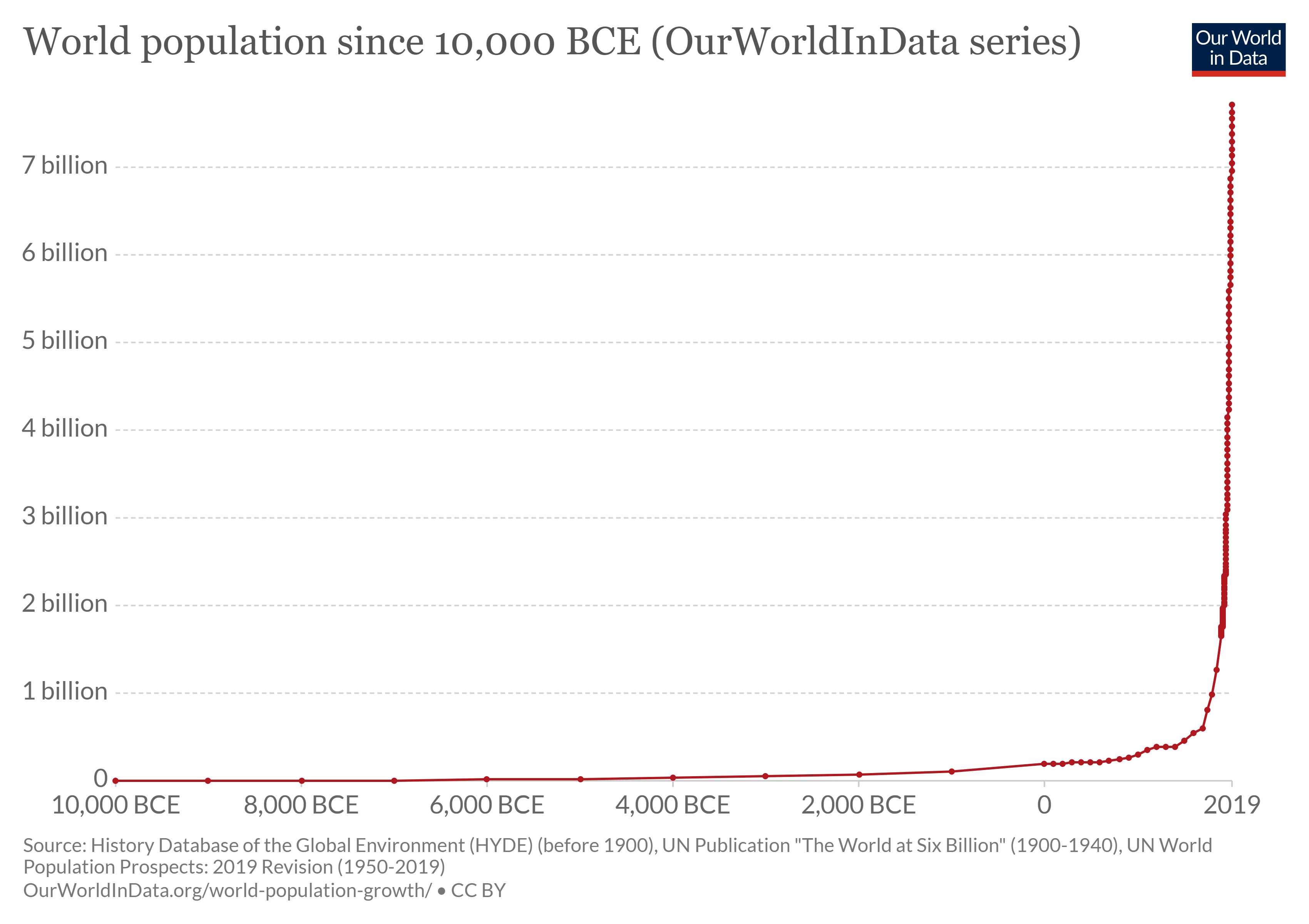
It is hard to imagine how we can meet and overcome our many challenges—social, economic, environmental—associated with growing populations (Figure 10) in cities and countries around the world, but transportation/mobility are part of the solution. In 1968, The Population Bomb (Ehrlich, 1968) predicted worldwide famine in the 1970s and 1980s, major societal upheavals, and other environmental degradation due to human population growth. While most of the predictions did not occur as predicted, the general premise is hard to ignore considering today’s climate change, environmental degradation, and other global events. Ehrlich’s predictions were not new. Thomas Robert Malthus (1766–1834), a British economist and mathematician, proposed that population growth would outstrip increases in food supplies in his day (Malthus, 1798). Others have predicted that a sixth mass extinction has already begun (Ceballos et al, 2017; Carrington, 2017). While events have not unfolded as Ehrlich, Malthus, and others predicted, environmental resilience and human ingenuity, although limited, have almost certainly delayed and modified the timing, scale, and specific details of their predictions. It is startling to contemplate these events, the fact that there is evidence to speculate on these outcomes is reason enough to act to change their potential impacts (Lovejoy, 2017). It is also rare that predictions of any kind take place as originally described.
FIGURE 10. Population growth over the last 10,000 years. (Source: Our World in Data, 2019)
Transportation and mobility have been around since the beginning of humans. In fact, the history of people and civilization could be told in terms of mobility. Therefore, it provides some context and perspective for where our species started and how we got to the present. Our species, after all, are travelers and explorers that seek to understand our world and ourselves.
The universe and our place in it is a complex one (Figure 11) (Flannery, 2012; Flannery, 2002; 2018, Christian, 2019; Harari, 2014).
Mobility allowed our species to move out of Africa and around the world in roughly 50,000 years (starting around 60,000-80,000 years ago and completing this global journey around 15,000 years ago). Early components included navigating on animal trails and along waterways (rivers, lakes, and oceans), increasingly large and sophisticated floating craft (boats, canoes, ships, and others), and using domesticated animals to increase transport (horses, alpacas, camels, and others) over larger and larger expanses. The invention of the wheel (and associated axle) appears to date back to about 5,000 years ago and was a milestone that has resulted in vehicles of increasing size and capability ever since. The Silk Road connecting Europe and Asia, and others, increasingly expanded trade and cultural exchange over vast areas of the globe.
History is marked by the longest and oldest trade route in the world—the Silk Road—an ancient overland trade route formed in the Western Han Dynasty from about 202 BC to 9 AD. This road or trade route spans 4,350 miles, connecting China, India, Persian Gulf, Japan and Europe. While this route has periodically declined in usage, it has existed for over 2,000 years. (History.com, 2019; Elizabeth, 2016; National Geographic Society, 2019).
Within the realm of recorded human history, mobility and its infrastructure is also marked by the Romans building a network of an estimated 200,000 miles of roads to connect their empire. That was in their DNA from the beginning, and is likely in ours today (Morales, 2021).
Fast forward to the United States. Our forefathers had a great interest in roads, particularly in a “National Road” to connect the emerging United States of America. What eventually became the National Road (also known as the Cumberland Road, Cumberland Pike, National Pike, and Western Pike) was created by an Act of Congress in 1806 and signed into law by President Thomas Jefferson. The Act was revolutionary and called for a road connecting the waters of the Atlantic with those of the Ohio River. Federal funding began in Cumberland, Maryland. The predecessors of the National Road included buffalo trails, Native American footpaths, Washington’s Road, and Braddock’s Road. The latter two were developed over part of the Nemacolin Trail, a Native American pathway, as part of the British campaign to evict the French from the forks of the Ohio River (Weiser-Alexander, 2019). Congress paid for the National Road, in part, by establishing a “2 percent fund” derived from the sale of public lands for the construction of roads through and to Ohio (National Road PA Org, n.d). Construction took longer than expected and the costs of maintenance were underestimated. As a result, tolls were eventually collected to pay for maintenance. To this day underestimating the cost of maintenance is true in many states and communities.
The United States developed the first National Park System in the world, signed into law by President Ulysses S. Grant in 1873, that began with Yellowstone National Park, treasures for all to enjoy. Prior to full control by the National Park Service in 1918, the U. S. Army Corps of Engineers was responsible for building roads, bridges, buildings and other appurtenances that provided access for the public to the Park while leaving nature as they found it (Williamson, 2016).
Early in the 20th Century, Gifford Pinchot, forester, conservationist, former Pennsylvania Governor, first Chief of the U. S. Forest Service, and close friend of Theodore Roosevelt, became known not only for advancing the protection of forests and public lands but economic development including road building for recreational public use access. (U.S. Department of the Interior, 2017; Encyclopaedia Britannica, n.d.).
In 1919, Oregon was the first to develop a reliable funding mechanism—the fuel tax—which has been the primary funding mechanism for roads and bridges. By 1929, all states had a fuel tax. It was not until 1956, that the federal government created a federal fuel tax—Federal Highway Trust Fund— to pay for construction (not maintenance) of the Dwight D. Eisenhower National System of Interstate and Defense Highways, commonly known as the Interstate Highway System. While much of the first half of the 20th Century was spent “getting out of the mud”, the 50 years subsequent to 1956 were spent building and maintaining the interstate highway system under the responsibility of state departments of transportation. In large part, the 21st Century ushered in an era of system preservation, due largely to inadequate funding, NIMBY (not in my backyard), and other competing issues (e.g. climate change, pandemic, social justice, equity, political polarization, etc.).
Using the United States as a yardstick, the first half of the 20th Century was marked by increasing motorized road, rail, air, and river and blue water conveyance. The second half of the 20th Century was marked by improvements in all areas of conveyance but largely by the creation of the Interstate Highway System. Simplistically, these can be referred to as the motorized conveyance era and Interstate era, respectively. The Interstate era also saw an increase in the emphasis on safety, an effort to decrease loss in lives and property driven partly by liability concerns and increasing value placed on human life. This is critical and continues to this day.
As great as development of the interstate highway system is, there is also a dirty secret. It destroyed many neighborhoods of color, the poor, and underserved through destruction of homes, businesses, displacement, congestion, pollution, noise, and racism. The shadows of these impacts linger to this day (McFarland, 2021).
Data for improving mobility is not new and is reflected in virtually every aspect of the mobility ecosystem. These include engine oil diagnostics which serve to extend engine life, data-based preventative maintenance checks and services and scheduled services for all types of vehicles, data-based structural and functional capacities of roads and bridges, data-based pavement management systems, data-based bridge management systems, data-based needs assessments and estimated costs for repair and replacement of infrastructure (roads, bridges, buildings, runways, etc.), data-based asset management for determining priorities of spending within and between modes, analytic tools such as life-cycle costs, return on investments, and many others. In fact, it would be difficult to identify an element of the mobility ecosystem that is not or cannot be managed by data—we are dependent on it. Of course, good data does not always exist. There are many examples of poor organization and project performance (over budget, over schedule, poor quality) that resulted from the lack of good data.
In 2007 the first iPhone was fielded, and this serves to mark the beginning of a new era, one driven largely by rapidly evolving digital technology but other elements as well, including demand for vast amounts of data and analysis. These elements include other technologies and increasing demand for collaboration. While 2007 was not the beginning, it is convenient to view it as an inflection point, especially for mobility. The United States is, and has been, a leader in mobility and that has been a significant force-multiplier in building our nation’s strong economy.
The result—the United States is the best connected country in the world with the most extensive transportation system in the world—over 4 million miles of public roads, over 600,000 bridges on public roads, over 5,000 public airports, over 90,000 miles of privately owned Class 1 freight rail, over 20,000 miles of AMTRAK passenger rail, over 10,000 miles of transit rail, nearly 7,000 public transit providers, over 25,000 miles of navigable river channels, and over 300 ports (Wagner, 2020; BridgeReports.com, 2019; Hughes-Cromwick, 2019; Mazareanu, 2020; Bureau or Transportation Statistics, n.d.; Maritime Administration, 2019). This does not even consider other privately owned roads, bridges, airports, and other means of conveyance such as pipelines, short-line rail roads, trails, etc.
While much of the rest of the world has lagged behind the United States in the mobility space, it is rapidly catching up. Two examples: China’s “One Belt, One Road” which will result in the largest road network in the world, paving the Silk Road connecting China and Europe (Belt and Road Initiative, n.d.), and India’s National Highways Development Project which will result in a road network of over 30,000 miles as an element of their industrial revolution (IBEF, 2021; Devonshire-Ellis, 2020). This does not even consider other countries such as Norway, where roughly half of all cars on the road are no longer powered by gas, incentivized by tax savings, toll road exemptions and other incentives to limit climate change (Welch, 2021).
Multimodal advances, including through technology and collaboration, are also increasingly providing three dimensional vice two dimensional thinking—land, water, air, and space. It’s about connecting people to people and to other assets and resources. As such, transportation and mobility professionals are deemed “essential workers.”
We are now in the 4th Industrial Revolution—digital technology—with velocity, scope, and systems impacts that are blurring the lines between physical, digital, and biological spheres. The speed of these break throughs has no historical precedence and is evolving at an exponential rather than a linear pace. (Schwab, 2016). The evolution of transportation and mobility has been quite a journey and that journey continues.
Ceballos, G., P.R. Ehrlich, R. Dirzo. (2017, July 10). Biological annihilation via the ongoing sixth mass extinction signaled by vertebrate population losses and declines. PNAS. Retrieved March 7, 2021, from https://www.pnas.org/content/114/30/E6089
Christian, D. (2018). Origin story: a big history of everything. Little, Brown and Company.
National Road PA Org. (n.d.). Historic National Road: America’s road to revolution. National Road PA Org. Retrieved March 7, 2021, from http://nationalroadpa.org/timeline/
There is likely not a transportation agency or company that does not consider safety as their number one priority. This is how it should be. The very first roadway powered vehicle fatality in the United States was on September 13, 1899, when Henry Hale Bliss, a 69-year-old local real estate dealer, was dismounting a southbound 8th Avenue trolley car in New York City when an electric-powered taxi cab struck him. Bliss hit the pavement, crushing his head and chest. Bliss died from his sustained injuries the next morning (Eschner, 2017). A plaque was dedicated at the site on September 13, 1999, to commemorate the centenary of this event. It reads:
Here at West 74th Street and Central Park West, Henry H. Bliss dismounted from a streetcar and was struck and knocked unconscious by an automobile on the evening of September 13, 1899. When Mr. Bliss, a New York real estate man, died the next morning from his injuries, he became the first recorded motor vehicle fatality in the Western Hemisphere. This sign was erected to remember Mr. Bliss on the centennial of his untimely death and to promote safety on our streets and highways.
Since then, it has been a continual challenge to reduce fatalities, injuries, and property damage. Entire industries have grown up during this time (insurance, roadway policing, etc.).
More recently, while technology and autonomous vehicles hold promise to reduce and perhaps eliminate crashes, it will be many years and probably decades before a significant impact occurs. The United States alone averages 30-40,000 roadway deaths a year. Globally there are 1.35 million people annually killed on roadways around the world (3,700/day) with a $1.8 trillion economic cost in 2010 U. S. dollars (Road Traffic Injuries and Deaths—A Global Problem, n.d.). In the meantime, efforts must continue to protect people. Within the past decade, many in the industry have set goals for zero fatalities. As an example, one of these is Houston’s Vision Zero Action Plan (Begley, 2020). The city’s plan identifies 13 “priority actions” the city is committing to take. Among them:
construct at least 50 miles of sidewalks annually
build at least 25 miles of dedicated bike lanes annually
evaluate road projects for options to include sidewalks, bike trails and other amenities
redesign 10 locations with high numbers of incidents every two years, and make those changes within the following calendar year
Additionally, the plan calls on the city to train its employees on how to talk about crashes to avoid victim-blaming or playing down safety issues. It also calls for a detailed analysis of Vision Zero’s progress to be made publicly available.
These are not particularly unique actions to improve safety, as professionals work every day—through planning, design, construction, operations, maintenance, education, and collaboration—to reduce, if not eliminate, crashes and the circumstances that lead to them in an effort to keep people safe. However, “action” is the operative word just as Houston is doing.
Smart Cities and Concepts
Advances in policy, planning, partnerships, and innovation are being developed at all governmental levels in an effort to provide a framework for the public and private sectors to work in unison within an architecture to increase effective and efficient mobility. An early example of this is the Intelligent Transportation System or ITS Architecture developed by the U. S. Department of Transportation in conjunction with many partners and issued in 2001.
There are a number of concepts that can and have been referred to as “Smart Cities” or “Smart City Concepts”. These have evolved especially during the technology revolution of the past two decades. This list is far from exhausting the myriad concepts or disciplines. The following discusses some of these disciplines and concepts, in no particular order, and none fit neatly within one topic.
Some disciplines in these concepts:
Strategic Planning. This is the starting point for virtually everything else. It is, of course, preceded by the necessary outreach, listening, team building, and collaboration needed to build a strategy.
Performance Metrics. Tracking progress toward meeting the goals imbedded within the strategic plan is equally important. Any plan becomes useless without progress toward obtaining it and performance metrics provide that tool to measure progress.
Connected and Automated Vehicles (CAV). Driven by rapidly developing technologies, CAV primarily provides more capacity from infrastructure, essentially reducing costs and improving safety.
Clean Energy—Maturing Alternative Fuel Technologies. The Industrial Age and resulting pollution and climate change that resulted have demanded clean energy in all its forms—solar, wind, hydrogen fuel cell, and electricity. Electricity is currently most dominant.
Electrification. As electricity emerges as the clean energy fuel, vehicle manufactures and governments are rapidly moving forward to increase electric vehicle use and reduce carbon-based vehicle use. The Governor of California has mandated no new internal combustion vehicle sales within California after 2035 while electric vehicle use continues to rise, and many states and communities are encouraging their use with supporting infrastructure. California has led many areas in the mobility space so this is one to watch.
Hydrogen Fuel Cells. Recently, the diesel engine manufacturer Cummins is developing hydrogen fuel cell engines that they believe will be efficient and compete favorably with electricity for heavy vehicles such as buses, heavy trucks, and trains.
Mobility as a Service/Mobility on Demand. Mobility as a Service, or MaaS, also known as Transportation as a Service, provides services typically with a joint digital channel that enables users to plan, book, and pay for trips. This is part of a more global shift from personally-owned vehicles to mobility provided as a service. Micro-mobility and micro-transit are also emerging (Regional transportation study suggests ‘’micro-transit’, 2020).
Car and Ride Sharing. Car and ride sharing has been around for decades, but the technology of recent years has allowed it to become much more effective and efficient as evidenced by the rise of Lyft and Uber.
Increasing Biking, Scooters, and Pedestrian Mobility. In recent years as a means to reduce car usage especially in metropolitan areas, bike lanes, trails, sidewalks, and scooter/bicycle rentals are increasing. These have the ability to also improve health while reducing congestion and increasing the capacity of infrastructure.
Big Data. This is the best of continuous improvement. Virtually every organization has legacy systems of data, physical (e.g. file cabinets) or electronic (e.g. servers or the cloud). For a variety of reasons, these data have resided in ”silos” and are not easily accessed and analyzed from broader, more complex perspectives. New technologies and related tools are now allowing “big data” to be accessed and analyzed with resulting increases in efficiency and performance.
Risk. Risk has always existed and is dominant in mega and giga projects as evidenced in projects such as the California High Speed Rail. While private companies have had risk management programs for years, the most recent federal transportation act (Fixing America’s Surface Transportation or “FAST Act,” 2015) requires states to have a risk management program. Using different tools to anticipate potential challenges (e.g. lost revenues) as well as opportunities (e.g. lost opportunities to increase revenues), these tools allow proactive development of strategies to mitigate and address the challenges as they occur vice the turmoil and problems associated with surprises. Of course this does not eliminate surprises termed “black swans” but these tools do significantly reduce most risks.
Resilience. Infrastructure is the backbone of our economy, connecting people, enhancing quality of life, and promoting health and safety. But climate change is revealing infrastructure vulnerabilities (Will infrastructure bend or break under climate change?, 2020). Like risks, resiliency or the lack of it, has always existed. As our built environment has increased, come into conflict with, and impacted the natural environment, the demand for protecting the built environment has increased. The National Oceanographic and Atmospheric Administration (NOAA) (Lindsey, 2020) estimates a sea level rise of one foot to 8.2 feet by 2100. The variables are such that it is impossible to project more precisely. These apparently man-induced climate changes have increased hurricanes, other storms, coastal erosion, flooding, and other events that erode or destroy man-made structures including roads and bridges. This has demanded more resilient infrastructure through better materials, protective structures, relocation to less exposed areas, improved construction practices, and others (Parsons, 2020). One of the more recent efforts to improve the built-natural environment coexistence is the U. S. Army Corps of Engineers initiative “Engineering with Nature” (https://ewn.el.erdc.dren.mil/).
Environment. This discipline, like other disciplines, interacts together. As living beings, we depend on and are part of the natural environment. Thus, while risk and resilience are critical to the built environment, the healthy functioning of the natural environment is essential to our well-being. There is general recognition that climate change, biological diversity, populations, species loss and other insidious environmental impacts are undermining the natural world on which life (including humans) depends. (Will infrastructure bend or break under climate change?, 2020; UN Report: Nature’s Dangerous Decline ‘Unprecedented’; Species Extinction Rates ‘Accelerating’, 2019; Bongaarts, 2019; Duckett, 2020; Sofia, et al, 2020; Kann, 2020). There are emerging lab cultured meats that may reduce greenhouse gases 20-30 percent, slaughtering of 80 billion animals a year, improve land use, and reduce creation and transmission of diseases such as coronavirus. In the end we must take care of our natural environment. There is an increasing demand for the transportation/mobility space to not only mitigate but improve the natural environment. While many techniques are not new, the U. S. Army Corps of Engineers initiative “Engineering with Nature” increases the attention to the importance and techniques to live well within and take care of the natural environment.
Internet of Things (IoT). This is technology taken to a high level. There is increasing demand for seamless mobility and IoT provides tools to achieve that future. As the title of this blog infers (The Mobility Ecosystem), the IoT allows an increasing emphasis on a “systems perspective” of our lives. Technology is allowing us to not only see the mobility ecosystem more clearly but how to improve its performance in all of its myriad impacts and relations…economic, social, environmental etc. (Joshi, 2020).
Some Smart City Concepts
Incentivize High Density Development. Our society has seen in an ebb and flow in regards to this concept—rural agriculture migrating to cities during industrialization, migrations to suburbs during metropolitan growth, migrations to more rural areas with increased opportunities for remote work, and a return to metropolitan areas primarily for work. This latter has dramatically increased traffic congestion and no one likes that. So, metropolitan areas are employing solutions to address this issue, such as providing incentives for high density development, not only of businesses, but housing and support services such as health care and grocery stores that are within walking distance. Due to population densities in European and Asian metropolitan areas, high density development has been occurring for some time. The United States is a much younger country so, we can learn from looking at their experience.
Incentivize Core Downtown Development by Charging Fees for Increases in Traffic. This is more of a technique than a concept. Nonetheless, charging fees for development that results in traffic increases can be a powerful tool while developing downtown areas, reducing traffic congestion, and increasing pedestrian/bicycle/scooter traffic.
Electrify Transportation: While electrification is a discipline, its application to traffic is considerable and is rapidly occurring. The economics driving this are discussed in a later post in this series.
Use More Shared and Connected Transportation. While shared transportation providers such as Uber and Lyft are becoming increasingly ubiquitous and used by many, especially millennials, there is little question that these and other providers will continue to expand. Connected transportation is beginning to emerge essentially in two forms. One is connecting various modes into one seamless multimodal transportation system, largely through technology. The other is by linking buses, trucks and cars into essentially “trains of vehicles or platoons” with little or no separation (i.e. virtually or physically connected). This has the net effect of increasing the capacity of infrastructure and increasing the productivity (and safety) of vehicles.
Use Traffic Calming Devices that Slow Cars and Enhance Pedestrian, Bicycle, Scooter, and Transit Mobility. This is likely one of the less obvious smart city concepts. However, the use of traditional traffic lights, traffic circles, pavement markings, and signs can have the net impact of slowing cars and enhancing pedestrian, bicycle, scooter and transit mobility.
Adopt User-Friendly App(s) for Routing and Paying for Multimodal Trips. This may be more of a technique for increasing connected vehicle use by a user-friendly app that allows for routing and paying for multimodal trips. These are being developed in locations such as the Denver RTD.
Free Public Transportation. As population densities increase and the impacts are valued and assessed via more “systems thinking,” the results may be that free public transportation may be more advantageous and cost-effective than alternatives. Dunkirk France concluded that free public transportation was more advantageous and cost effective than other alternatives, and thus provide free public transportation. Kansas City, Missouri, is providing free public transportation in a one year test to determine whether to do the same.
Stay Healthy Streets. Making more use of streets has gone by various names including complete streets, but Stay Healthy Streets is a more recent terminology. Essentially, this concept increases the usage of roads from motorized vehicles to pedestrians, bicycles, and other micro-mobility. This can be accomplished by closing or limiting streets to vehicle access, pavement markings for bicycle lanes, etc. The cities of Seattle and Minneapolis saw increases in pedestrian and bicycle traffic during the COVID-19 Pandemic while other cities saw little or no change. The question now is whether to keep these Stay Healthy Streets or not.
The fDis Global cities of the future (fDiintelligence.com, a service of the Financial Times LTD) also offers a variety of great insights, including by competitions to identify the best practices for future global cities.
Smart Rural Concepts
In an effort to be holistic, it is appropriate to provide some discussion of Smart Rural Concepts. The needs in largely agriculture-based communities for access to hospitals, schools, jobs and other communities is equal to that of more urban communities although the challenges may vary, including longer travel distances. Nearly every element in the above discussion of Smart Cities also relate to rural areas, the need for strategic planning, clean energy, electrification, big data, resilience, 5G, ITS, variable message signs, CAV, GPS, IoT, user-friendly apps for routing, etc. One exception is that most rural communities are not burdened with traffic congestion in their downtowns so incentivizing high-density development downtown makes little sense. However, many rural communities strongly desire more downtown traffic as a perceived means of economic development. Traffic can be a two-edged sword depending on your perspective. Truck traffic routing is another area rural communities may struggle with more than more urban communities.
One of the more challenging aspects of rural areas is that 45 percent of the nation’s fatalities are on rural roads while only 19 percent of the nation’s population lives in rural areas (Rural/Urban Comparison of Traffic Fatalities, 2020). This warrants counter measures not usually used in more urban areas. With more than 30 people a day dying in roadway departure crashes on rural roads, inexpensive countermeasures like SafetyEdge, rumble strips, lane markings, signage, and edge lines can and are bringing that number down.
Bongaarts, J. (2019, September 4). IPBES, 2019. Summary for policy makers of the global assessment report on biodiversity and ecosystem services of the Intergovernmental Science-Policy Platform on Biodiversity and Ecosystem Services. Wiley Online Library. Retrieved January 14, 2021 from https://onlinelibrary.wiley.com/doi/full/10.1111/padr.12283
Fixing America’s Surface Transportation or “FAST Act.” (2015, December 4). U.S. Department of Transportation. Retrieved January 14, 2021 from https://www.transportation.gov/fastact




 Leadership in Transportation